The Odyssey

“What was the Siren’s song? All the things you wanted to be, then all the things you never wished for. That what you most want is what you most can’t have. And what you most can’t have is what you already had, and lost."
When you think of Christopher Nolan the first word that may come to mind is “grand” or maybe “time”. A director who can spin a yarn fit for a blockbuster release yet not sacrifice thematic weight. Inception, Interstellar, Tenet; popcorn films that make you think. That’s what makes him an excellent choice to take on the mantle of one of humanity’s oldest tales.
If you remember your high school English studies (thanks Mrs. Wiand) then Homer’s The Odyssey and its meaning should ring clear in your head. If not, no worries, the fact Nolan has drummed up so much interest from modern audiences in a 3,000 year old epic poem is beautiful to see, and a testament to the timelessness of its themes. A man clapped in my theater when Odysseus finally strung his bow amidst the suitors; that is the emotional payoff one can only get after investing in a character for almost 3 hours.
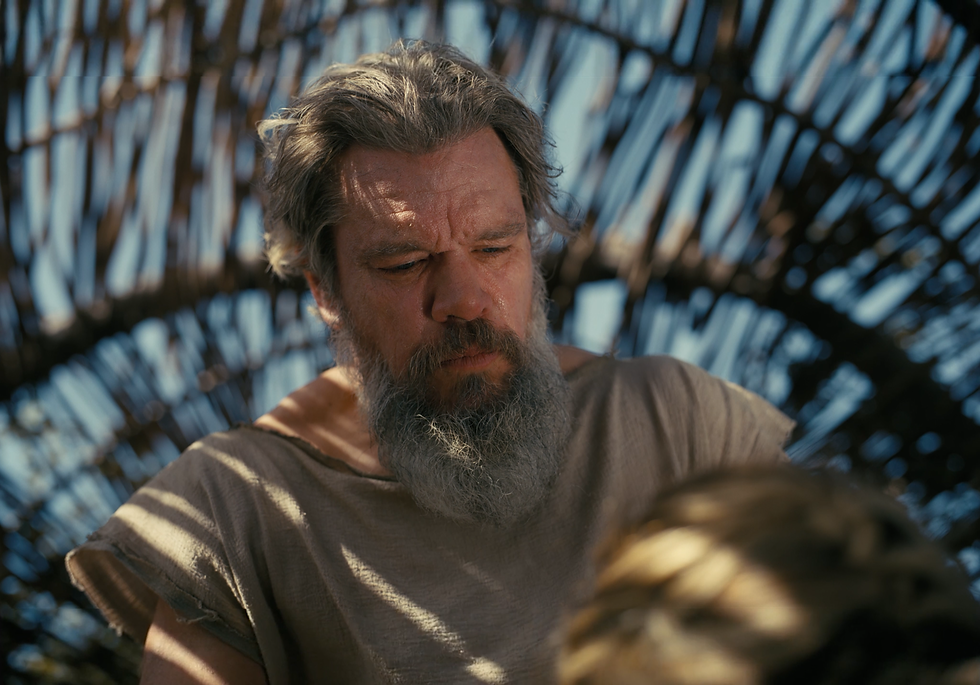
Non-linear storytelling and the manipulation of time are also Nolan calling cards. In his version of The Odyssey, Odysseus’s time spent on the island of the lotus flower frames the whole narrative. Trauma from his actions and the escape from the pain of memory. As Calypso feeds him the lotus flower he sinks deeper into lush escapism, forgetting home and all that he loved, but still vaguely recalls to her the details of his journey that led him here. And we the audience cut back and forth through the decades.
Hubris is the fatal flaw of Odysseus that besmirched the gods and cursed his journey home, with each obstacle along the way bringing a new test— or a new opportunity to falter. It was cool to see the symbol of the Trojan horse flipped on its head (almost literally) as an act of cowardice and a violation of Zeus’s law instead of this triumphant victory, which is a consistent theme throughout the movie. Turning a fight into a hunt, as he puts it. The entire sacking of Troy and the beheading of what is possibly Athena in disguise (Zendaya) is stunning to take in as well as the shell shock of Odysseus, laid out on the city steps, as his eyes pan across the havoc wrecked by his men.
“Civilization will rise again. And dawn will break over the darkened world, and our mistakes will once again be forgotten.” A great closing line to leave the audience with as a reminder of our failure to learn the lessons of history’s past sins.
It’s also worth noting Christopher Nolan must truly have some paternal issues because the father-son relationship plays a role in many of his films. From Cillian Murphy’s character in Inception to Bruce Wayne in Batman Begins, and you can feel it here with Telemachus wrestling with the absence of his father he never met and holding onto the hope of Odysseus’s survival. Nolan’s interpretation of The Odyssey may take some liberties, but it is fitting for a work that Homer, which historians debate if he was even one person, most likely stitched together an epic mosaic from generations of different myths and poems. The “Homeric Question” is quite the interesting rabbit hole to go down. Yeah I’m sure the Mycenaean Greeks did not speak like Matt Damon, but after 3 millennia passed the water gets a tad muddy on what they sounded like anyway.


Comments